Frequently Asked Questions
Healthy dogs can go without food for up to 48 hours, but longer periods require veterinary consultation.
Yes, stress and anxiety are among the most common factors that cause dogs to lose their appetite.
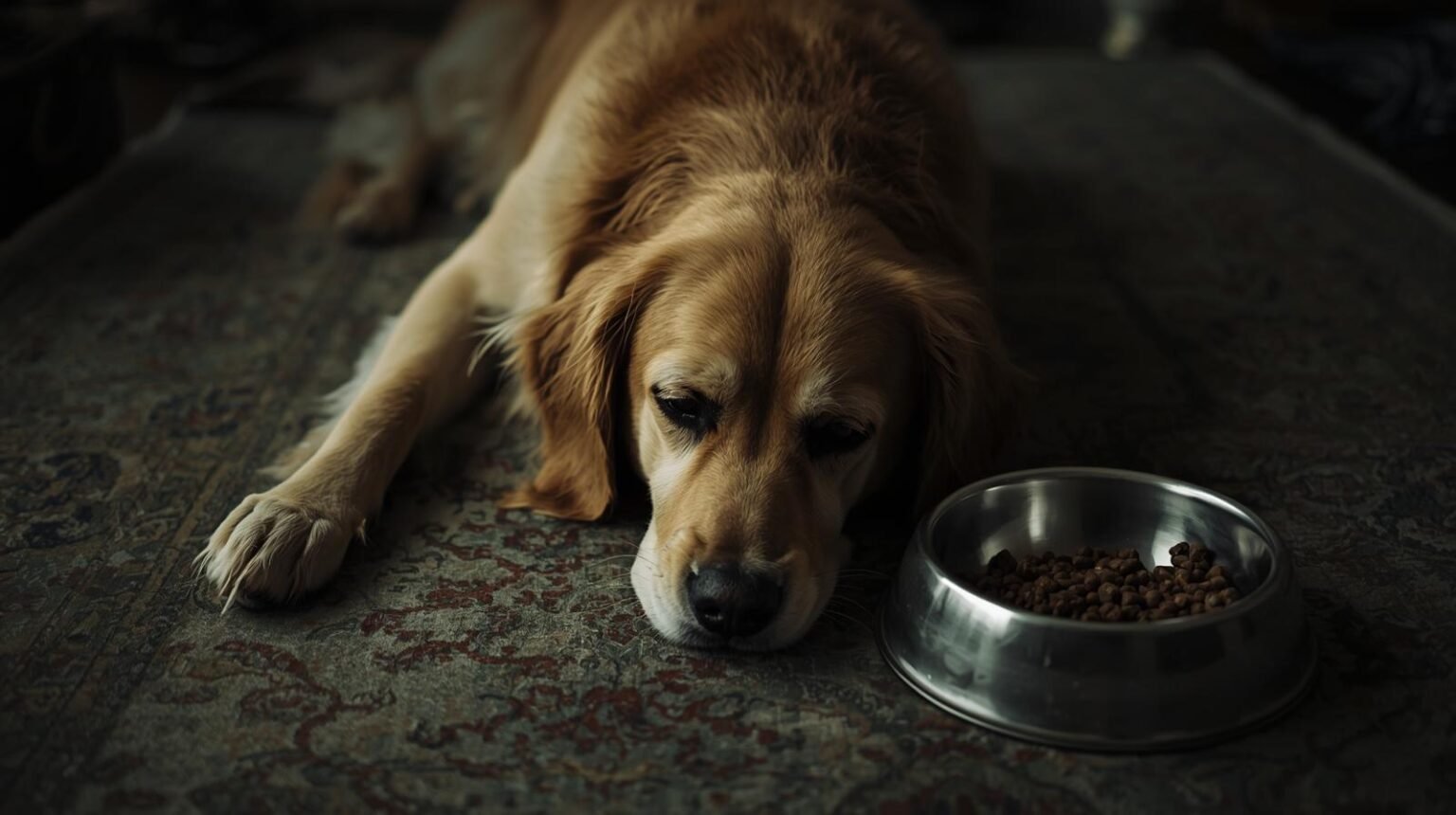
 4-Week Dog Feeding Plan
(A detailed plan to help your dog eat again)
Week 1 – Restoring Appetite (Returning to Food)
 Goal:
Goal:
Restore appetite
Reduce stress
Monitor for any potential hazards
 What the dog can eat:
Boiled chicken
Skinless
No salt
No spices
Dog bone broth (one or two tablespoons)
It is preferable to warm the food slightly to release its flavor
 What the dog cannot eat:
Leftovers
Bread
Milk
Seasoned meats
All types of treats
 What the owner should do daily:
Put out the food at a specific time
Leave the bowl for only 15-20 minutes
If the dog doesn’t eat, remove it
Monitor the dog’s activity level (is it active or not)
 Week 2 – Transitioning to Regular Food (Gradually)
Goal:
Re-accustom the dog to its food
Establish a regular feeding routine
 What What the dog should eat:
70% boiled chicken
30% wet or soft dog food
Unsweetened natural yogurt (once or twice a week – 1 teaspoon)
What the dog should not eat:
Treats
Frequent food changes
Human food
What the owner should do daily:
Same mealtime
Same place
Same bowl
Avoid sudden changes to the routine
 Week 3 – Selective Food Treatment
Goal:
Let the dog eat without coddling
Make its food the focus again
 What the dog should eat:
80% dog food
20% toppings or a little broth
Divide the meal into two small portions
What not to feed:
Overfeeding chicken
Any daily stimulation
Feeding outside the routine
What the owner should do daily:
Don’t leave the food bowl full all day
A slow feeder can be used Nutrition
Maintain a calm environment during mealtimes
 Week 4 – Consolidation and Follow-up
Goal:
Return to a normal diet
Monitor overall health
 What the dog should eat:
100% balanced dog food
Chicken only:
Once a week
Or as a treat only
What not to feed:
Relying on chicken
Leftovers
Random treats
What the owner should do daily:
Monitor weight
Monitor activity
Ensure the dog drinks enough water
 If you notice any of the following symptoms:
Vomiting
Diarrhea
Fatigue
Weight loss
 See a veterinarian immediately.